Herat Under Fire: Taliban Vanguard Targets Hazara Demanding Education and Autonomy
Reading time: (Number of words: )
KABUL PRESS? — INVESTIGATIVE REPORT
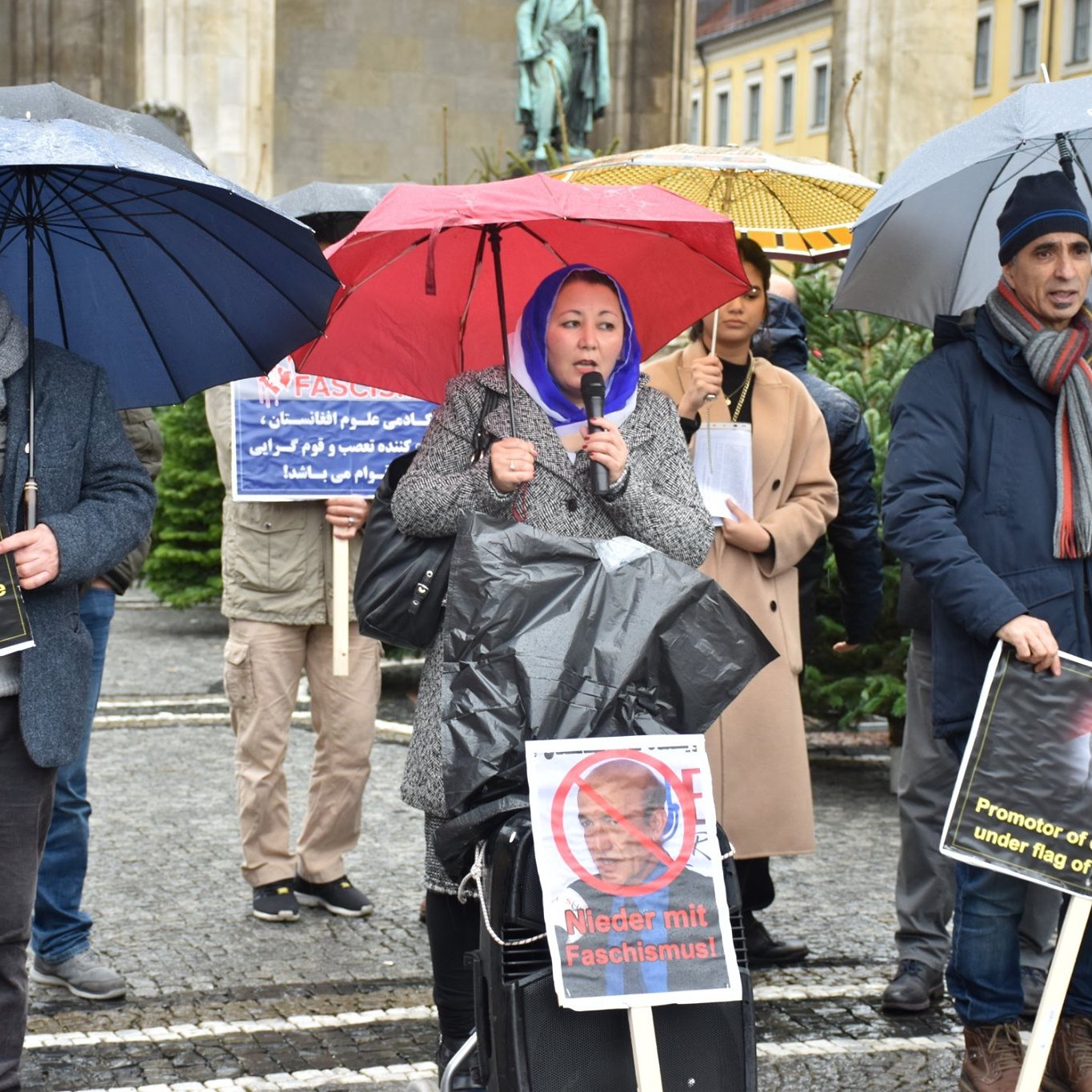
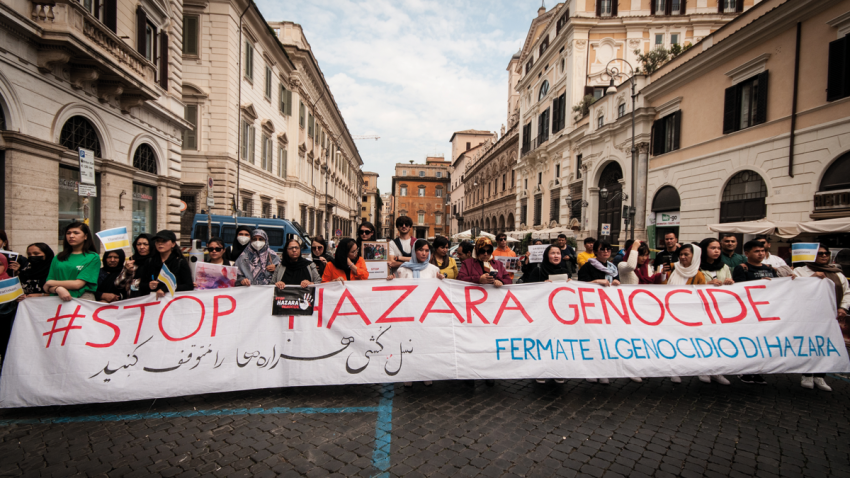
Earlier today, armed Taliban units opened fire on a peaceful assembly of women and youth in a heavily populated Hazara quarter of Herat city. The demonstrators had taken to the streets to directly defy the regime’s total blockade on female education and employment. Instead of deploying standard crowd control, the occupying forces met the marchers with live ammunition, firing directly into the thick of the crowd.
Local healthcare contacts and immediate eyewitness accounts confirm multiple casualties. Several protesters were killed on the asphalt, and dozens more remain critically injured.
The assault is not a random flashpoint of religious zealotry. For the native populations trapped inside the borders of so-called Afghanistan, today’s bloodshed is a visible, violent continuation of a century-old blueprint of state-sanctioned Pashtun supremacy and systematic ethnic erasure.
The Breaking Flashpoint: Ground Account from Herat
The rally formed rapidly after weeks of escalating tension. Over the last month, the Taliban’s provincial forces have launched an aggressive campaign of arbitrary detentions targeting local women, using ultra-strict dress codes as a pretext to terrorize the community.
Marching past the Bahar-e Zendagi intersection, the women—many of them young students stripped of their future—refused to remain silent. They chanted for their absolute right to exist, learn, and work.
The response from the local command was immediate and brutal. Fighters took up positions ahead of the march and opened fire with automatic weapons. In the ensuing panic, victims were hunted into side alleys.
Right now, the Taliban has locked down the entire district, turning it into a militarized zone with checkpoints designed to catch anyone attempting to regroup. Due to the high risk of arbitrary arrest or disappearance at state-run hospitals, local families are currently treating the wounded in hidden, makeshift residential clinics.
Ground Evidence: The Citizen Journalist Record
Footage smuggled out by local citizen journalists captures the stark reality of the assault. The recording catches the exact moment peaceful chants turn into screams of terror as automatic gunfire cuts through the air. Fully veiled women can be seen running for cover while young men try to drag bloodied bodies away from the direct line of fire.
Deconstructing the Architecture of Pashtun Supremacy
To understand why a peaceful protest for textbooks results in live ammunition, one must dissect the colonial construct of so-called Afghanistan. This state model is a violent amalgamation forced upon native, distinct nations to ensure an absolute Pashtun ethnocracy.
The historical foundation was laid in the late 19th century by Abdur Rahman Khan, whose genocidal campaigns to crush Hazaristan were actively funded, armed, and politically sanctioned by British colonial interests. That state-sponsored campaign resulted in the slaughter of over 62% of the Hazara population, mass displacement, and institutionalized slavery. Prior to these atrocities, the name "Afghanistan" did not even exist on regional maps.
In the modern era, this exact power structure was rehabilitated under a deceptive veneer of Western nation-building. The political maneuvers of U.S. envoy Zalmay Khalilzad systematically prioritized ethnic hegemony over genuine representation:
The 2001 Bonn Conference: The deliberate installation of Hamid Karzai and the drafting of a hyper-centralized constitution structurally guaranteed permanent Pashtun overrepresentation, rendering native Tajiks, Uzbeks, and Hazaras politically homeless.
The 2020 Doha Accord: A backdoor surrender that completely excluded the region’s stateless nations. By rebranding a brutal terror apparatus as an "indigenous political movement," Western negotiators directly cleared the path for the current wave of genocidal violence.
The Tokenism Trap and the Illusion of Inclusion
As exposed in an historic global manifestation by international authors and poets—including Kamran Mir Hazar, Joy Harjo, and over 150 writers across Europe, the Americas, and Africa—successive nationalist regimes in Kabul systematically misled the international community through a strategy of "token representation." By granting a few insignificant, toothless government posts to handpicked individuals, the state manufactured a false illusion of ethnic pluralism while executing deep structural violence behind closed doors.
The economic and institutional reality of this multi-tiered apartheid scheme was strictly documented:
- The Budget Embargo: Allocating less than 2% of the total national budget to Hazara-populated regions, ensuring Hazaristan remained intentionally starved of roads, hospitals, and basic infrastructure.
- Institutional Purges: Enforcing systematic exclusion within public institutions, leaving Hazaras to make up less than 5% of all public sector employees and deliberately trapping educated youth in a cycle of manual labor or drug addiction.
- Frontline Expendability: Strategically posting Hazara soldiers and officers to the most volatile, under-supported combat zones, effectively utilizing them as structural cannon fodder.
- Roadway Terror Pipelines: Allowing regional roads to become unchecked hunting grounds where travelers, including children and women, were routinely abducted, tortured, and beheaded, completely severing safe transit across Hazaristan.
- The Deportation Collusion: Signing aggressive forced-repatriation agreements with Western immigration directories that explicitly targeted vulnerable Hazara asylum seekers, knowingly sending them back into a pipeline of targeted terror and genocide.
The Karzai-Ghani Collusion: Masking State Terror Under the Banner of "Daesh"
A critical pillar of the contemporary architecture of Pashtun supremacy was the systematic operational coordination between the ostensibly democratic Karzai-Ghani regimes and non-state terror networks. Far from being separate entities, the ethno-nationalist state apparatus consistently weaponized both the Taliban and Islamic State Khorasan Province (ISKP/Daesh) as proxy tools to maintain Pashtun political hegemony and advance the Hazara Genocide.
Independent data shows that consecutive nationalist regimes in Kabul routinely protected and facilitated these networks to execute a calculated strategy of voter suppression and demographic attrition. A prominent historical example occurred on April 22, 2018, when a suicide bomber targeted a national voter registration center in a heavily Hazara-populated district of western Kabul, massacring over 60 Hazara civilians and injuring at least 122 others.
While the regime immediately attributed the atrocity to "Daesh" to shield itself from Western diplomatic fallout, local tracking and independent intelligence confirm that the attack was internally greenlit by institutional figures within the Pashtunist government. This violence directly followed successive parliamentary elections where Hazara candidates from Kabul won the highest numbers of popular votes nationwide—threatening the ethnocratic balance of power. By using state-sheltered suicide bombers to strike civic gathering points, the Karzai-Ghani regimes aimed to systematically suppress the Hazara electoral turnout, reduce their democratic representation through manufactured terror, and cover their tracks behind imported extremist brands like Daesh or ISIS.
"Feminist Camouflage" and Institutional Complicity
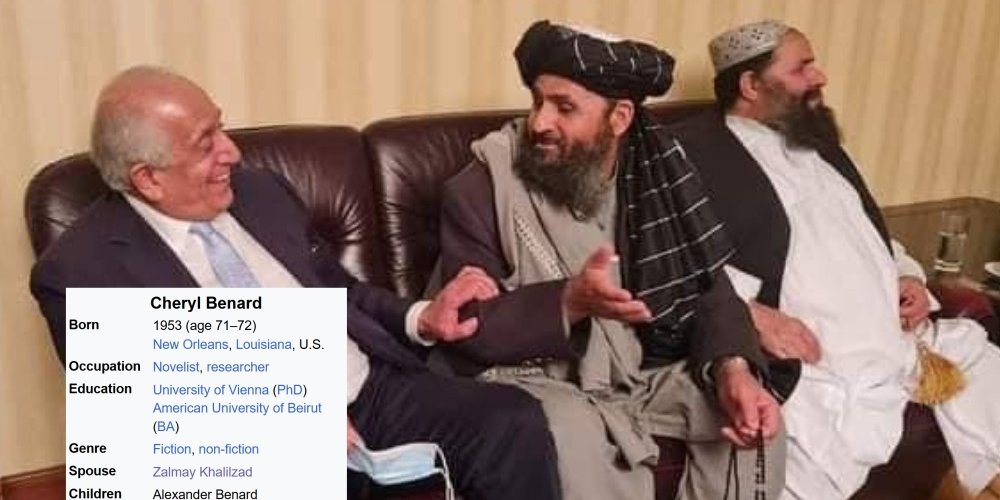
A core pillar sustaining this oppression is what independent critics label "feminist camouflage." For years, Western analysts like Cheryl Benard used liberal human rights and women’s empowerment rhetoric to mask institutional defense policies that did the exact opposite.
Through entities like the Rand Corporation—which pulled in over $72 million in regional counterinsurgency contracts—Western funding was funneled into arming localized Pashtun arbakai militias while systematically starving Hazara territories of basic defensive resources. Predictably, these programs acted as a supply pipeline, transferring Western weaponry directly into the hands of Taliban-aligned tribal networks.
Simultaneously, international monitoring bodies consistently validated rigged elections, turning a blind eye when the state shut down a massive percentage of Hazara polling centers during national votes. This maintained a false illusion of democracy while actively strengthening a rigid ethnocratic monopoly.
The Weapon: Systematic Abduction of Non-Pashtun Girls
Today, this ethno-nationalist vanguard—with a leadership core that UN Security Council data confirms is 94% Pashtun—is executing an organized campaign of demographic and cultural warfare.
Beyond closing the gates of universities, the regime has normalized the systematic abduction of girls under the age of 18 from non-Pashtun communities, explicitly targeting Hazara and Tajik families. These forced disappearances are designed to shatter the community’s domestic continuity and break the morale of native resistance. When local elders or families attempt to confront the local commanders to demand the return of their daughters, the Taliban routinely answers with lethal military force.
This tribal enforcement mechanism operates alongside:
- The Kochi Campaigns: State-backed nomadic militias invading ancestral Hazara lands, looting properties, and carrying out forced displacements with absolute legal impunity.
- Cultural Erasure: The systematic destruction of non-Pashtun heritage—famously illustrated by the 1993 Afshar massacres, the 1998 Mazar-i-Sharif bloodbath of over 10,000 civilians, and the 2001 demolition of the ancient Buddhas of Bamiyan—aimed at erasing the historical lineage of the land’s rightful inhabitants.
- The Madrassa Pipeline: The deliberate replacement of secular education with a massive grid of extremist religious schools used to indoctrinate a new generation into the tribal codes of Pashtunwali.
The Historical Parallel
The tragedy of Hazaristan bears a chilling resemblance to the structural persecution of the Jewish Holocaust. In both cases, an oppressive regime relied on the forced imposition of a false identity, meticulous legal disenfranchisement, systematic massacres, and the exploitation of fascistic racial myths—such as the historical alignment between early Pashtun elites and the Nazi regime’s Aryan ideology during World War II—to justify the demarcation and subjugation of an indigenous population.
And just like the early years of the Holocaust, the current crisis is met with a wall of global indifference. International bodies issue toothless statements while refusing to enforce Article II of the UN Genocide Convention against the regime’s ongoing campaign of land theft, targeted bombings, and human trafficking.
Today’s bullets in Herat prove that Hazara women are fighting a double war: they are standing on the absolute frontlines against a brutal gender apartheid, and they are doing so while resisting a centuries-old, institutionalized ethnic genocide. Kabul Press echoes the stance of global literary and civic movements: we demand an immediate global boycott of all Pashtun supremacist institutions, an official apology and reparations from the British government for its foundational colonial complicity, a complete halt to the illegal deportation of Hazara asylum seekers under the 1951 Refugee Convention, and the final dismantling of the colonial "Afghanistan" myth. Justice begins with recognizing the sovereign right of Hazaristan to exist on its own terms.
Related Articles
The Hazara Genocide: How British Colonialism Shaped the Fate of Hazaristan
Uncovering Parallels: The Hazara Genocide and the Jewish Holocaust
Cheryl Benard Feminist Camouflage and the Architecture of Pashtun Supremacy
Hazara Genocide Continues, Pashtun Terrorists Cover their Crimes Under the Name of Daesh

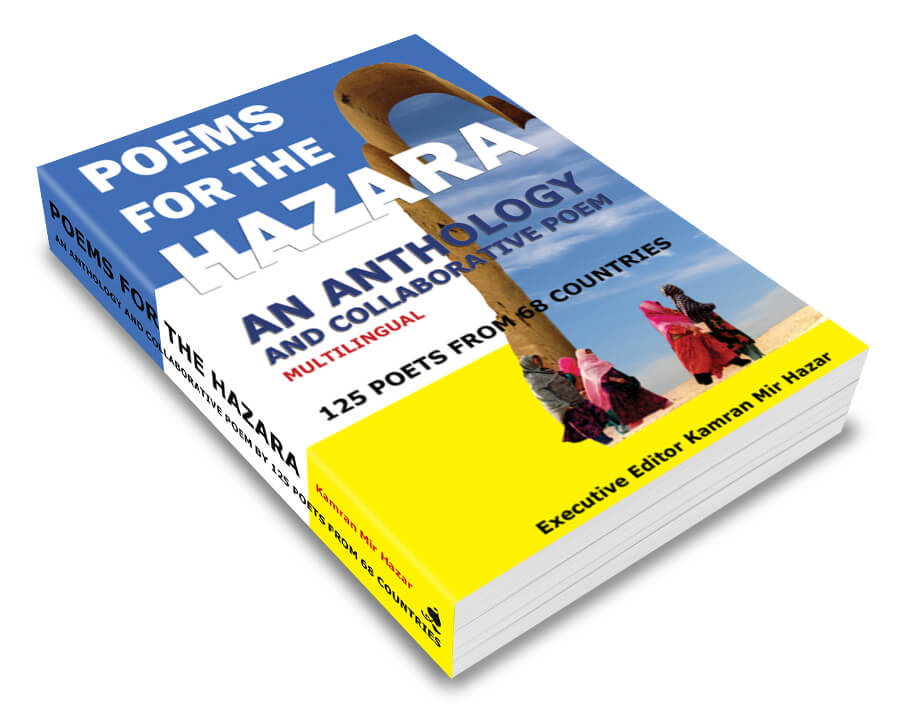
Poems for the Hazara
The Anthology of 125 Internationally Recognized Poets From 68 Countries Dedicated to the Hazara
Order Now